Simple Kimchi
By popular demand - well, a few people asked. Taught to me at the age of 11 by the sweetest sister-in-law.

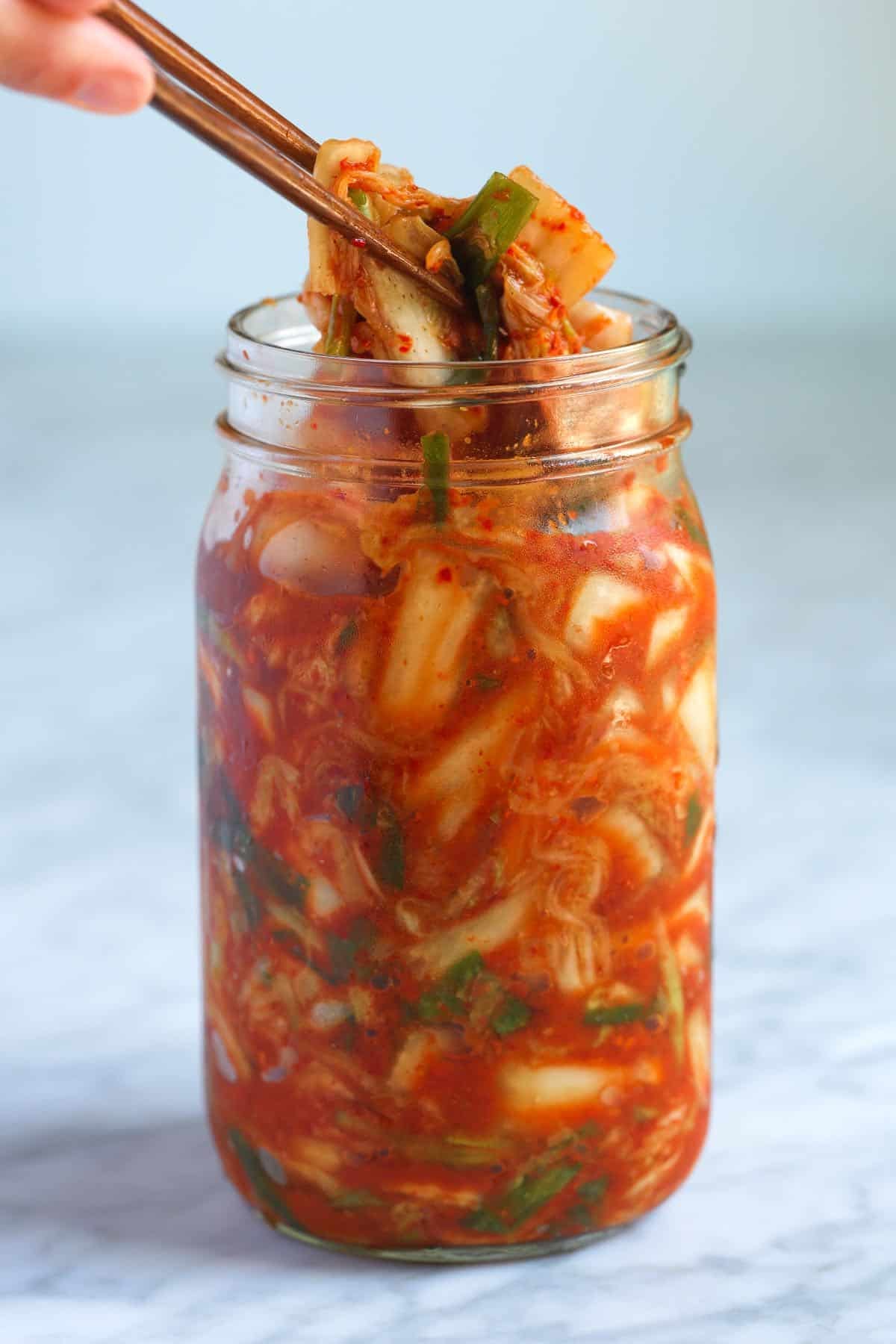
Okay, let’s talk Korean Kimchi. This article was inspired after seeing a podcast on microplastics. It’s some scary stuff, people. Generally by now we each have the equivalent of a plastic spoon of microplastics in our brain. But then they said studies turned out showing the bacteria that occurs in Korean Kimchi (fermented Napa cabbage) are capable of processing microplastics and taking them out of our body. You can buy the special probiotic capsules to take several times a day with Kimchi probiotic (regular probiotics do not contain this). Or, if you are like me and love Kimchi, make sure you’re eating it daily
I, personally, am not making any claims about microplastics studies! But I had shared online that my eldest brother had returned from Korea when I was about 10 years old, bringing to me a Korean sister who I immediately adored. We would sit out back together with our bowls of kimchi and rice. As a result, I may only have half a plastic spoon in my brain. 😁
There are many, various recipes for Kimchi on the internet, but to me they are more complicated than what I was taught. You can browse through them to see if you want to tackle more complicated processes. When my Korean SIL came to the U.S. in the 1960s, traditional Korean ingredients were not available in stores. So I’m sure that’s why she made a much simpler version.
Napa cabbage
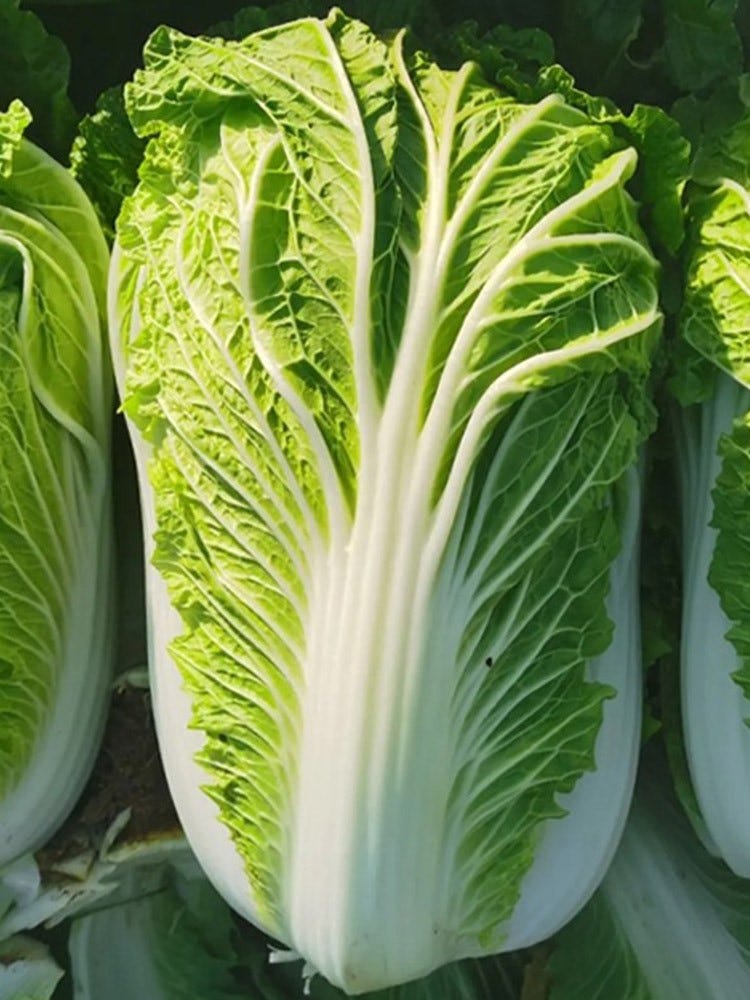
Start with Napa cabbage. Not the round head of cabbage you may be used to. It must be a Napa cabbage. Chop it in good-size chunks, place in a big bowl or pan and salt it down. I toss the leaves to salt evenly using about two tablespoons of salt for one head of cabbage. Cover with a tea towel and set aside to brine for about 5 to 6 hours.
After this you want to wash the cabbage well to rinse off any remaining salt. I fill a sink with cold water and swish the leaves around. Then scoop them back into the rinsed out bowl/pan and rinse them some more and drain well. As a final step, I dump out the well drained leaves onto a couple of towels to let them drain better.
I add a couple bunches of green onion. Wash them, cut them in half crosswise, and then slice them longways into strips (including the green ends). Toss these with the cabbage in your big bowl or pan. Now slice up about six cloves of garlic - more if they are small cloves to add in. You can also add shredded carrot or sliced up radish. I don’t - it’s a matter of preference.
Season with red pepper: Traditional Korean red pepper is Gochugaru. I’ve never bothered to hunt it down. It simply was not sold here in the 60s. So my SIL always used Cayenne power. As far as I can tell, they are basically the same thing except Cayenne is about three times hotter. So if you are following a recipe that calls for gochugaru, you only want about 1/3 of what it calls for.
Caution- you can add as much or as little Cayenne as you wish. It might take some experimenting in altering it from batch to batch to find what you can tolerate heat wise. Do not try to add enough to make your cabbage look as red as Kimchi. You’ll die. LOL. Kidding aside, it gets redder as it ferments and ages. So your brand new batch will not appear red. You’re going to use about 1 to 2 teaspoons of Cayenne (up to a tablespoon (3 tsp) if you’re brave. I also like to add a teaspoon or two of paprika for color and smokiness.
You can also add a teaspoon of soy sauce if you like or even a pinch of sugar to speed up the process of fermentation.
Now you will need to pack your kimchi into a large, clean jar or several smaller jars. Back in the day, my sister-in-law used large, cleaned mayonnaise jars. Seal tightly and leave out on your counter for 24 hours minimum. It can sit out for up to three days or more if you want it more fermented and sour. You can open it and taste a piece each day. Then move it to the fridge where it’ll keep for at least four months if not all eaten up long before then!
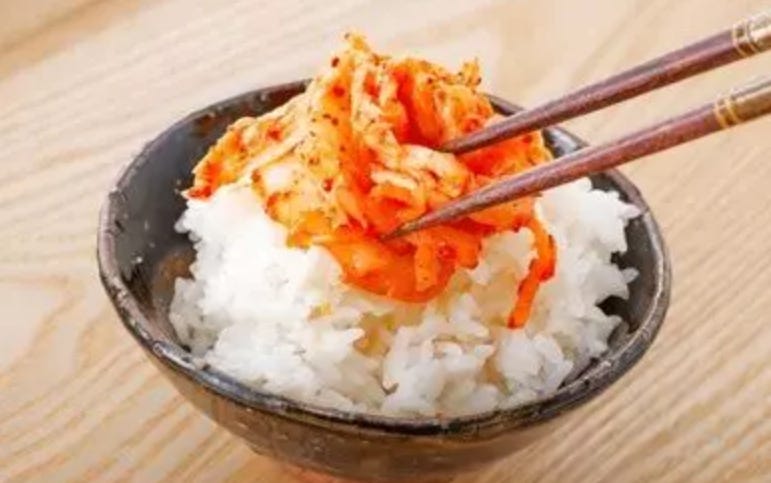
It should be garlicky, with some heat to it, not too salty, and sour, sour, sour. Remember, fermentation is what you want. I’ve always preferred to eat my kimchi with white, sticky rice. If you become proficient with chopsticks, you can delicately stretch a piece of cabbage leaf over your rice and squeeze the ends together to make a nice, little package of rice wrapped in kimchi to pop in your mouth. Kimchi goals. 😁
Thanks for the recipe. Interestingly, earlier this evening I made a cole slaw with a regular cabbage. I need to try kimchi but will have to wait until I can get a Napa cabbage.